

Thursday, November 27, 2014

Wednesday, November 26, 2014
Faces of the U.S. Naval Academy
In honor of Native American Heritage Month, our next featured midshipman is MIDN 2/C Samantha Billy, granddaughter of a World War II Navajo Code Talker.
Tuesday, November 25, 2014
Sponsor Families Provide a Home Away From Home
During the upcoming Thanksgiving Holiday, it is predicted
that more than 20 percent of the Naval Academy’s Midshipmen will not make the
journey back home. However, for these Mids, there is still a chance to
celebrate with friends and family.
The United States Naval Academy’s (USNA) Sponsor Program
provides more than 2,200 Midshipmen with a home away from home. The surrounding
community of Annapolis knows the sacrifices of those attending USNA, and more
than 750 families are enrolled in the USNA Sponsor program, to be there for
Midshipman when they need them.
Midshipmen come to USNA from all over the world. From the
day they arrive, they are immersed in a new environment. The transformation and development into the
USNA standard of a naval officer takes years of training, and is
challenging. Having a family support
network nearby can prove to be helpful during difficult times.

“Families sponsor Midshipman when they enter USNA as plebes
(freshmen),” said Rose Clark, USNA Sponsor Program Coordinator. “These families
know the Midshipmen are away from home, some for the first time, and do what
they can to help support and assist them here at USNA and in their personal
lives.”
In many ways, sponsors take on a second-family-type role,
encouraging the Midshipman in their private lives, supporting them in their
activities and acting as a liaison between Midshipman and their families.
“These families selflessly open their homes to the
Midshipman,” said Clark. “I see them on the bleachers at sporting events, I
hear the appreciation of home cooked meals and on the opposite end, I hear the
sincere gratitude from families knowing their children are being looked after
by people who genuinely care.”
In years past, the radius of the Sponsorship Program was
measured 22 miles from USNA’s Chapel dome. Due to the demand of families
wanting to sponsor, it has been extended to 30 miles. The program’s popularity
spread mostly through word of mouth.
“We had heard about the program in 1994 from someone who was
a sponsor,” said Ken Ochs, a 20-year sponsor and retired Captain of the
Baltimore County Fire Department. “Sponsoring has been very rewarding for my
wife Kathi and me. We have sponsored two or more Midshipman every year and we
keep life-long connections with them. When our only son was married, officers,
who were like his older siblings, came in from all over for his wedding.”
Sponsors receive mandatory training from USNA to facilitate
and encourage success of sponsors with their Midshipman.
“The training sponsors receive has a kind of ‘do’s and
don’ts’ for aiding a Midshipman,” said Clark. “These families understand this
is not a typical learning environment, there are rules for conduct outside the
walls of USNA. That being said, these families do as much as they can to make
sure that it feels as much like home as possible.”
“Most years we have had one or two stay with us over
Thanksgiving, and that’s not even including their classmates and friends” said
Ochs. “We want to be able to give them that feeling of the holiday. They are
like family to us. Even after they spend holidays and the years at USNA, we
keep in contact with them and we watch them progress in their lives and
careers. The program is equally rewarding for us as it is for them.”
Plebes entering USNA are able to request a sponsor.
Interested in sponsoring a midshipman?
Visit the Sponsor Program website or the Sponsor Program Facebook site
for more information.
Saturday, November 22, 2014
MAG Helps Get Annapolis Students Excited About Physical Fitness
Members of the Midshipman Action Group have been working
with the Mighty Milers program to help get young students excited about
physical fitness.
The Mighty Milers is an after school running program sponsored
by Annapolis Recreation and Parks. The 6-week program introduces elementary
school students to physical fitness through after school training.

The program culminates in an annual track meet in November.
The midshipmen from MAG helped train the students, and they – along with the
USNA Marathon Team – helped cheer the students on during the Nov. 12 meet.
“We engaged the kids in running drills and games with the
goal in mind of running a mile at the track meet,” said MIDN 1/C Blake Hamilton. “All the kids
completed their mile at the track meet.”
Visit Annapolis Recreation and Parks’ Facebook page for more
photos.
Thursday, November 20, 2014
Service Selection Wrap-up
At noon today, the midshipmen of the Class of 2015 found out their service assignments - which communities they will serve in after graduation in May. It's an important milestone for the mids that puts them one step closer to the fleet jobs they've been training for since I-Day, and arguably earlier than that.

Though some of the midshipmen already knew their assignments prior to today (specifically subs and other nuclear options), for the majority of the midshipmen this was a highly anticipated event, and within their company spaces they made quite a celebration of it.
As of today, this is the breakdown for the Class of 2015:
Though some of the midshipmen already knew their assignments prior to today (specifically subs and other nuclear options), for the majority of the midshipmen this was a highly anticipated event, and within their company spaces they made quite a celebration of it.
As of today, this is the breakdown for the Class of 2015:
Surface Warfare: 251
Submarines: 137
SEAL: 30
Explosive Ordnance Disposal:
15
Navy Pilot: 243
Naval Flight Officer:
79
Medical:
12
Supply: 11
Civil Engineering Corps:
5
Intel: 10
Information Warfare:
7
Information Professional:
4
Oceanography: 1
Navy Total: 805
USMC Ground: 177
USMC Pilot: 89
USMC Flight Officer:
5
USMC Total: 271
Class of 2015 Service Assignment: MIDN 1/C Dan Bohannon
MIDN 1/C Dan Bohannon was selected to be a naval flight
officer.

"It wasn't until first class year that I seriously
considered putting aviation community in my top preferences,” said Bohannon.
“Specifically I found being a weapons systems officer on board an F/A-18F Super
Hornet to be fascinating and really enticing. The advancement opportunities and
bonuses in the community also looked great, and since I'm looking to make a
career in the Navy, it was definitely a great fit for me."
Class of 2015 Service Assignment: MIDN 1/C Annie-Norah Beveridge
MIDN 1/C Annie-Norah Beveridge was selected for the submarine community.

“I really look up to all of our predecessors and I am thankful that they have paved the way. The females that I met during my youngster submarine cruise were incredibly capable and found great meaning in their jobs. I don't doubt that we will face challenges, as any junior officer does, but we are ready to face them head on.”

“I really look up to all of our predecessors and I am thankful that they have paved the way. The females that I met during my youngster submarine cruise were incredibly capable and found great meaning in their jobs. I don't doubt that we will face challenges, as any junior officer does, but we are ready to face them head on.”
Class of 2015 Service Assignment: MIDN 1/C Jonathan Lucas
MIDN 1/C Jonathan Lucas, 1st Regiment executive officer,
will be a submarine officer.
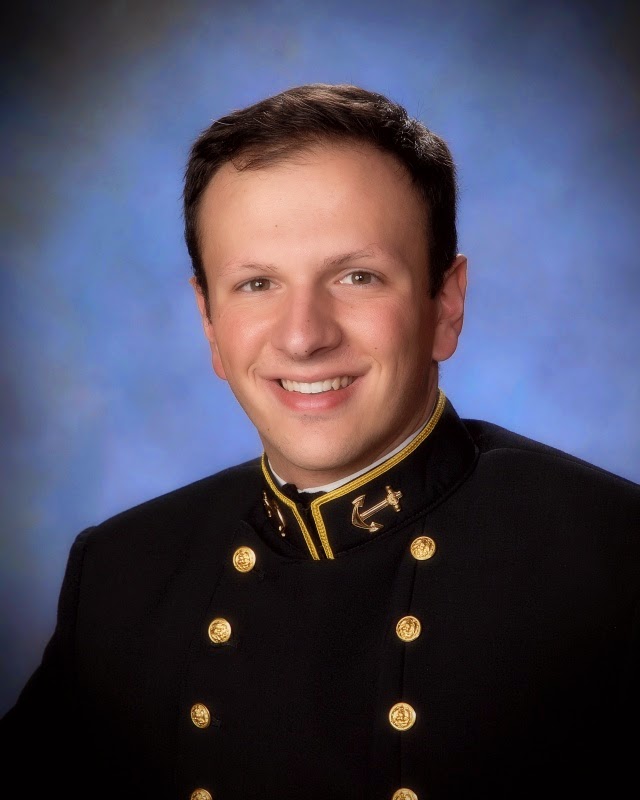
He was selected earlier this year, but still enjoyed
watching his company mates find out their service selections today.
"I actually selected in early April, but it has been
exciting to be here while everyone else found out what they were chosen for
after working so hard. After this, it’s going to be a little hard to focus with
being excited about what is ahead of us after graduation.”
Class of 2015 Service Assignment: MIDN 1/C Shannon Cuthbert
MIDN 1/C Shannon Cuthbert, 12 Company honor advisor, was selected for Surface Warfare.

"I am really excited to get out into the fleet and be a naval officer. I am looking forward to doing what I have been training for. I am so grateful for all the opportunities I have had since coming to the Naval Academy. Being here has changed me so much and made me a better leader."
Both of Shannon's parents were grads of the Class of 1985. Her father flew SH-60 helicopters and her mother was an intelligence officer. Shannon is the first SWO in the family.
"My parents are really excited. Both of them are really excited I chose what was best for me. They both helped by giving me information about how their naval career was which helped define my decision, but in the end, I made the final decision.
I wanted SWO because I think the community has a great mission and because of the leadership opportunities and the many possibilities there are in the surface warfare community."
Both of Shannon's parents were grads of the Class of 1985. Her father flew SH-60 helicopters and her mother was an intelligence officer. Shannon is the first SWO in the family.
"My parents are really excited. Both of them are really excited I chose what was best for me. They both helped by giving me information about how their naval career was which helped define my decision, but in the end, I made the final decision.
I wanted SWO because I think the community has a great mission and because of the leadership opportunities and the many possibilities there are in the surface warfare community."
Class of 2015 Service Assignment: MIDN 1/C Ian Sharbel
This is MIDN 1/C Ian Sharbel, who was selected to be
a Marine pilot.
.jpg)
“I’m pretty excited right now. It’s been a long time
dream. My father and grandfather were both Marines, and many other members of
my family are Marines so it feels great to be carrying on the family
tradition.”
Who are you going to call first?
“I’m going to call my dad first. I think he’ll be
pretty proud and excited. He knows that I wanted to do this, and he has been a
big supporter from the beginning, in coming here and all throughout the four
years.”
What’s next?
“Now I am going to focus on preparing for the Basic
School, enjoying time with some of these guys that I’m classmates with, and
making the most of these last couple months of camaraderie that we have been
building the last few years.”
Any advice for lower classmen about selecting a
service?
“Talk to your mentors, and try to understand the
different communities and opportunities that are available. Understanding what
you are getting into and the overall community structure can go a long way in
helping you find the right community for you.”
Class of 2015 Service Assignment: MIDN 1/C Zane Markel
The long wait has come to an end. The Class of 2015
found out their service assignments today. This is MIDN 1/C Zane Markel, who
was chosen for the SWO-Information Warfare option. He will enter the fleet as a
SWO but, once he earns his warfare pin, will transfer into the Information
Warfare community.

"I didn’t even know what information warfare was
before I came here," said Markel. "I had heard it mentioned during my plebe summer, and when I
went to look it up, I couldn’t find any information about it at the time.
"Once I learned about it, I realized right away, wow …
this is a brand new area of warfare. We need people who are going to decide how
we are going to fight this type of warfare, and I wanted to be part of that.
This has been the number one goal of mine for the past three years. Everything
I have done has been to try to get into information warfare and to try to be a
good information warfare officer.
"I feel fantastic. I don’t have any words for it.”
Mid Sailors Save The Day
By Gary Lambrecht
For skipper Brandt Clemons ’15, leading Navy’s victorious
offshore sailing crew on 44-foot Gallant in last month’s Annapolis Yacht Club
Fall Series made for a very satisfying weekend.
But Clemons will always remember a most unusual twist when
he savors the Midshipmen’s achievements of October 4 on the Chesapeake Bay.
That day, as Gallant was more than halfway to a comfortable win in the 26-mile
race, the Midshipmen were forced to change course, and hours of seamanship
training became quite useful.
One minute, Clemons was at his perch in the rear of Gallant
eyeing The Fish – the only boat posing any hint of a threat to the Mids’
commanding position. The next minute, Clemons saw the lower lifeline of the
B-32 snap at the port aft quarter. Then, he watched two crew members tumble
into the bay.
Instantly, the Navy crew shifted gears and went into a
different kind of action.
“As soon as the man-overboard call happened, I completely
forgot about the race. We were shocked at first. I’ve never seen anyone go overboard
like that,” Clemons said.
“My driver [helmsman Charlie Morris ‘16] said, ‘What do we
do?’ I told him, ‘We’re going to get ’em. Tack the boat.’ At that point, it
just became reaction and rote memorization for us. Everybody had a job to do.
We’ve done so many man-overboard drills that it’s almost beat into you. The
crew was like an orchestra.”
Instead of being laser-focused on crossing the finish line
first, the Mids, who had practiced dozens of man-overboard exercises, were now
faced with a rescue operation as their top priority. They quickly realized that
neither Fish crew member treading water was wearing a flotation jacket. In
addition, both wore full, foul-weather gear on what was a cold, wet, windy day,
with waves of three to four feet on the bay.
Wasting no time, the Mids tacked, then backed the jib to
perform a quick stop, then dropped the sails and coiled all the sheets to avoid
fouling the prop when the engine was started.
From there, Gallant motored back to the sailors, who had
separated and were floating on opposite sides of the boat. Clemons threw a line
to one of them, and the Gallant crew pulled him aboard. A Navy crew member
tossed a flotation device to the other sailor, who then was pulled back on
board The Fish.
The whole rescue took approximately four minutes. The
exercise happened to be timed by the alert crew of a sistership Naval Academy
boat crewed by Clemons’s teammates that had been trailing Gallant.
That precious time initially cost the Mids, who, after
interrupting their race to aid their competitors, ended up in fourth place. But
the loss proved temporary. The AYC regatta committee granted Navy’s request for
a redress hearing and awarded the victory to the Mids a week later.
The rest of the Navy crew included Trevor Voegele ’15
(executive officer), Tilghman McCabe ’15 (jib trimmer), Nick Satterlee ’17 (jib
trimmer), Daniel Panchevre ’17 (pit), Matt Finley ’16 (mast) and Donal Hanlon
’16 (bow).
Efforts to contact the chief judge from the regatta
committee and members of The Fish crew were unsuccessful.
Jahn Tihansky, head coach of the Naval Academy Varsity
Offshore Sailing team, beamed with pride at the way the Mids’ diligent practice
time had reaped such a meaningful benefit.
“These guys train their butts off. They do things like
500-mile training sails to Nantucket,” said Tihansky, who estimated the team
has done about 40 man overboard drills. “The fact that they were able to do
this as quickly as they did is a testament to how important this training is to
them.
“I’ve sailed for 40 years. I’ve been involved in three
man-overboard situations personally. I know of people who have been lost at sea
and not recovered. The good thing is we have standard operating procedures. We
are required to wear life jackets, which is a requirement in intercollegiate
sailing, but not [offshore sailing] that involves the general public. You never
know what kind of tiger is hiding behind the tree.”
Clemons said the incident provided a sharp reminder of the
danger involved in his chosen sport. A native of Farmington, MO, Clemons had
never sailed before arriving at the Academy.
“Half of my crew has
been sailing for a year or less. We do these long summer sails. When I was a
freshman, we sailed to Bermuda, and we sailed through Hurricane Irene. We were
300 miles off the coast of anything,” Clemons said.
“If somebody goes overboard there, he’s going to die if you
don’t get to him in time. The Coast Guard can’t get there in time. The crews
take this very seriously,” he added. “At first, we didn’t think [The FISH
rescue] was a big deal. I mean, the Chesapeake Bay isn’t the Bering Strait. But
when we got back [to the academy] after the race, the coaches told us, ‘No.
This is what could have very easily been a huge tragedy.’
“Look, we really
wanted to win that race, and we knew we had sailed well enough to win the
regatta. But there wasn’t a single member of the crew who resented how [the
rescue] caused us to finish fourth. We got to pull two guys out of the water.
Whether we got the redress or not, there’s nothing better than that.”
Wednesday, November 19, 2014
Tuesday, November 18, 2014
Holiday Season at the Navy Lodge
The holiday season is rapidly approaching. For a season of
family and fun, keep the Navy Lodge in mind for
holiday guests.
“Navy Lodges are the perfect place for guests of military
members to stay during the holidays,” said Navy Lodge Annapolis general
manager, Malerie Shipe-Meyers. “Navy Lodges offer a great value with our
spacious rooms, kitchenettes, free Wi-Fi and many other amenities we offer. We
also provide a complimentary breakfast in the morning, a manager’s reception,
in-room coffee and premier guest service.”
Navy Lodge guests will experience a variety of room types to
include family suites, with cable TV and DVD player, as well as kitchenettes
with a microwave and full size refrigerator.
Navy Lodges are equipped with guest laundry facilities, vending areas
and playgrounds for the little ones. As an added convenience, pets can stay at
many Navy Lodges. Please contact the Navy Lodge regarding pet policies.
To make a reservation for any of the 39 Navy Lodges
worldwide, call toll free at 1-800-628-9466 (NAVY-INN) or log onto
www.navy-lodge.com. For other military lodging options, go to www.dodlodging.com.
Monday, November 17, 2014
USNA Chinese Culture Club Visits New York
By MIDN 2/C Wesley Yuan
USNA’s Chinese Culture Club visited New York during the
weekend before Veterans Day. We visited the American Legion Post 1291 in
Chinatown, where they have the country's greatest number of Chinese-American
members.

The American Legion is an organization that helps provide
homes for homeless veterans, helps veterans financially, and provides
educational and career opportunities for veterans.

This is the second time the midshipmen of the Chinese
Culture Club visited this post, but the first time we joined them in their
annual parade in Chinatown.

They gave us a tour of their auditorium and recreational spaces in Chinatown and treated us very well. We marched with them in the parade and attended their ceremony to honor veterans at the Lt. Kimlau Memorial Square, named after a U.S. Air Force bomber pilot of Chinese descent who fought during World War II.

Afterward, we ate lunch with them and presented their post commander
with a U.S. Naval Academy banner as a gift.
Sunday, November 16, 2014
U.S. Naval Academy Parachute Team
Midshipmen at the Naval Academy are pretty impressive. They catch bullets in their teeth. They leap tall buildings in a single bound.
Okay, they don't really do that. But they do do this:
Friday, November 14, 2014
6th Co Intramural Domination / Brigade Bowl
By MIDN 1/C Molly Hanna
If you have been reading the recent installments of “Intramural Scott Strasemeier” emails, then you know that 6th Company intramural warriors dominate on the athletic fields.

Whether it’s basketball, flag football, soccer, or racquetball, 6th Company has been making headlines for a solid year now with numerous Brigade Championships. What’s the secret behind this company’s stellar athletic skills in not one, but three different sports?
6th Company intramural warrior coaches provide an inside scoop on some of their training tactics that have proved successful in leading the current and past intramural seasons to victory:
The Flag Football Coach, 1/C Chris Grigg’s attributes his team’s success to high school nostalgia, saying "We're just a bunch of guys that peaked in high school and are trying to relive the glory days of those Friday nights out on Hospital Point. Combine a competitive nature with some incredibly average athletic ability and boom you get two, working on three, undefeated seasons. That's all there is to it. At the end of the day, there aren't any puppies out there on Hospital Point. Gotta get up and be the dog."
1/C Keaton Dille, 6th Company’s Intramural Basketball coach describes his team’s winning strategies, "6th company basketball lives by the three core values of winning, winning, and winning. We hold thrice weekly team lifts, we shoot every morning at 0530, and we offer daily sacrifices to the spirit of Larry Bird. We're not exceptionally athletic nor are we talented, we simply grind our way to championships."
This hard work does not go unnoticed among 6th Company and members of the Brigade. This determination and competitive spirit has brought the Jackalopes’ intramural teams from average to a force to be reckoned with in the last few years.
Last, but not least, Racquetball. 6’s Coach 1/C Tom Sledge perfectly captures the essense of this unique sport and the necessities for victory, saying “"Racquetball success really comes down to a few main elements. 1. you must be oddly un-athletically athletic 2. You must embrace "approved wrap-around lenses" as your natural look, and 3. You can't wear two gloves. Just one. If you can master all three, then put your racquetballs where your mouth is and maybe you can try to stop 6th company racquetball from winning its 4th straight Brigade Championship."
With the first ever Brigade Bowl today, 6th Company will fight among 1st regiment’s most talented intramural warriors against some of the best of the Brigade.
The Bowl will take start at 1730 on Farragut Field, with 1st Regiment dressed in blue and 2nd Regiment in white. Sure to foster some healthy competition and fun among the Brigade’s most athletically gifted warriors, the first ever Brigade Bowl will hopefully become a tradition that will carry on many years into the future.
If you have been reading the recent installments of “Intramural Scott Strasemeier” emails, then you know that 6th Company intramural warriors dominate on the athletic fields.
Whether it’s basketball, flag football, soccer, or racquetball, 6th Company has been making headlines for a solid year now with numerous Brigade Championships. What’s the secret behind this company’s stellar athletic skills in not one, but three different sports?
6th Company intramural warrior coaches provide an inside scoop on some of their training tactics that have proved successful in leading the current and past intramural seasons to victory:
The Flag Football Coach, 1/C Chris Grigg’s attributes his team’s success to high school nostalgia, saying "We're just a bunch of guys that peaked in high school and are trying to relive the glory days of those Friday nights out on Hospital Point. Combine a competitive nature with some incredibly average athletic ability and boom you get two, working on three, undefeated seasons. That's all there is to it. At the end of the day, there aren't any puppies out there on Hospital Point. Gotta get up and be the dog."
1/C Keaton Dille, 6th Company’s Intramural Basketball coach describes his team’s winning strategies, "6th company basketball lives by the three core values of winning, winning, and winning. We hold thrice weekly team lifts, we shoot every morning at 0530, and we offer daily sacrifices to the spirit of Larry Bird. We're not exceptionally athletic nor are we talented, we simply grind our way to championships."
This hard work does not go unnoticed among 6th Company and members of the Brigade. This determination and competitive spirit has brought the Jackalopes’ intramural teams from average to a force to be reckoned with in the last few years.
Last, but not least, Racquetball. 6’s Coach 1/C Tom Sledge perfectly captures the essense of this unique sport and the necessities for victory, saying “"Racquetball success really comes down to a few main elements. 1. you must be oddly un-athletically athletic 2. You must embrace "approved wrap-around lenses" as your natural look, and 3. You can't wear two gloves. Just one. If you can master all three, then put your racquetballs where your mouth is and maybe you can try to stop 6th company racquetball from winning its 4th straight Brigade Championship."
With the first ever Brigade Bowl today, 6th Company will fight among 1st regiment’s most talented intramural warriors against some of the best of the Brigade.
The Bowl will take start at 1730 on Farragut Field, with 1st Regiment dressed in blue and 2nd Regiment in white. Sure to foster some healthy competition and fun among the Brigade’s most athletically gifted warriors, the first ever Brigade Bowl will hopefully become a tradition that will carry on many years into the future.
Thursday, November 13, 2014
USNA's Sprint Football Team Takes Down Army
By MIDN 1/C Annie-Norah Beveridge
On Friday, October 31st the Naval Academy Sprint Football team took down Army, 27-7, finishing their season atop the CSFL standings with a perfect 7-0 record. I caught up with the senior quarterback and co-captain, Joe Hampton, to learn a little more about the sport, its history, and the 65 midshipmen along with the managers, trainers, and coaches that make up the team.
On Friday, October 31st the Naval Academy Sprint Football team took down Army, 27-7, finishing their season atop the CSFL standings with a perfect 7-0 record. I caught up with the senior quarterback and co-captain, Joe Hampton, to learn a little more about the sport, its history, and the 65 midshipmen along with the managers, trainers, and coaches that make up the team.
Sprint Football is
regulation football with one unique rule.
Players cannot exceed the 172 lbs. weight limit. Originally called
“lightweight football,” the weight limit was 150 lbs. when it became popular in
the 1930s.
Legend has it that
large state schools such as the University of Michigan and University of
Florida were the first institutions to field teams. Over the years, however, the league settled
with eight teams, comprised of Ivy League schools, Army, and Navy. The Naval
Academy joined the league in 1946 and since joining, has a 349-66-9 record –
including 41-31-1 record against Army – and 36 league championships. There are 20 Sprint Football players in the
Navy Athletic Hall of Fame.

The Sprint Football’s practice schedule is very similar to any other football team’s schedule. At lunch, the team will watch films and lift weights and after school they spend between two and three hours on the field running through plays, installing new schemes, and conditioning particularly hard.

The Sprint Football’s practice schedule is very similar to any other football team’s schedule. At lunch, the team will watch films and lift weights and after school they spend between two and three hours on the field running through plays, installing new schemes, and conditioning particularly hard.
The weight rules add a
unique facet, and the team must weigh-in four days before game day and two days
before game day. In order to prepare for
these weigh-ins, team members will spend extra time on a bike or on a treadmill
with sweats on to lose weight. They will
also stick to a stringent diet that includes tuna salad, greens, and fruit as
staples.
If you consider all of
the field time, lifting time, film, and classroom sessions and cutting time as
lab hours, Sprint Football equates to roughly 18 credit hours.
Having lost to Army
for two years in a row, the Navy team was hardly the favorite approaching the
championship game. While Army and Navy
often dominate the league, this year saw extreme parity in the league as the
Navy team trailed at some point in every game except Princeton and Army, which
were both home games.

It would be impossible
to pinpoint a single player from the last game as everyone contributed to the
team effort. The offensive line, with
four seniors, played an incredible game against a strong front 7 for Army. Not only did they play a pivotal role in Eric
“Cheese” Wellmon’s record setting year, but they did an outstanding job
protecting the quarterback, giving the receivers time to work and get
open.
At the same time, Alec
Jarm at tight end not only blocked like an animal but had possibly the best
catch of the night on a pivotal drive early in the game. Dom Chumich dislocated his shoulder but
continued to selflessly dominate his space with his body. The defense played their best game of the
year as the pass rush was phenomenal from seniors Ben Pope, Jack Moyle, and
Chris Mershon. Billy Eisenhauer had an
incredible game as a run stopper and in pass coverage.
In addition to that,
the defensive back-field came up huge with key turnovers and keeping Army’s
potent passing game contained for sixty minutes. If you’ve ever seen Remember the Titans, it
was a game reminiscent of Julius’s speech on the real meaning of perfection.
The team played perfectly Friday night.

Going forward, the
team hopes to build off the success that they have had this year which starts
with the idea of all team members that they are winner; in Bancroft Hall, in the
classroom, and on the field.
Wednesday, November 12, 2014
USNA Faculty and Staff: It's On Us
Faculty and staff across the Naval Academy Yard pledge to stop sexual assault and foster an environment where everyone on the Yard feels safe. It's on all of us.
Tuesday, November 11, 2014
U.S. Naval Academy Museum Makes Top Ten
The U.S. Naval Academy Museum, housed in Preble
Hall, is listed among the top ten "military museums that bring battles to
life," according to a recent article in USA Today.

The museum was cited for its multimedia exhibits
that cover U.S. naval history from the American Revolution to modern conflicts
as well as its impressive display of more than 70 historic ship models, the
largest collection in North America.

See the full list and visit the museum's website to
learn more.

Monday, November 10, 2014
What is Movember? Q&A With MIDN 2/C Bray Wilcock
It's Midshipman Mustache Month at the U.S. Naval Academy. While typically midshipmen are required to be clean shaven, they're given the opportunity during November (or "Movember") to grow facial hair in an effort to bring attention to men's health issues.
This is the second year the midshipmen have participated in Movember. MIDN 2/C Bray Wilcock, the driving force behind USNA's campaign, talks about how it all came about.
Q. What is the history of Movember?
This is the second year the midshipmen have participated in Movember. MIDN 2/C Bray Wilcock, the driving force behind USNA's campaign, talks about how it all came about.
Q. What is the history of Movember?
BW: I believe it
originated in Australia in the '03-'04 time frame with a group of dudes who
wanted to bring back the 'stache and do some good with it, at the same time raising
awareness for men's health and prostate cancer.
Q. What inspired you to bring "No Shave
November" to USNA?
BW: My high school
participated in Movember, and after trying to grow a mustache over youngster
summer through my cruise and NOLS, I had a bunch of talks with my friends about
somehow trying to get Movember started at the Academy. Most, if not all,
thought it couldn't happen which pushed me even harder to try to get it
approved. More importantly, one of my uncles passed away from cancer during
November of my plebe year and I wanted to honor him and his memory by trying to
raise awareness for men's health. His name was Brad Gano, and he grew up in
Baltimore.
Q. Can you explain the approval process? How
did you market this to the chain of command?
BW: It was
definitely a battle trying to bring something that had never been done before
to the chain of command for approval. But, with my proposal and the unwavering
support of the sergeant major chain of command and the brigade's midshipman chain
of command, I think we presented something to our superiors that was pretty
hard to say no to. This year was a bit easier because it was approved last
year; only some minor tweaking had to be done to submit a pretty convincing
package to our superiors.
Q. Who in the Brigade has grown the most
impressive mustache that you have seen so far?
BW: It's hard to
say since we just over a week into Midshipmen Mustache Month. But I've seen a
lot of potential. It's gonna be a good 'stache season.
Midshipmen, remember
to put pictures of your mustache on social media with #midstache and
links to men's health websites to raise awareness on some really important
issues.
Sunday, November 9, 2014
.jpg)
Saturday, November 8, 2014
USNA's Native American Heritage Club
While USNA's Native American Heritage Club is quite new on the scene,
they have already had an impact on the Brigade.
MIDN 1/C Stefanie Cotner, the NAHC Public Affairs
Officer has done a great job spreading the word about events, from the famous
“Fourth Meal Indian Tacos” to meetings that have been hosted to discuss the
struggles that Native Americans in the Armed Forces face.
The club hosted a screening of the
documentary “Reel Injun,” about the portrayal of Native Americans in film, and
it prides itself on being a community-based club looking to become more
involved with the local Native American community through attending local events, such as pow wows.

The club also hosted Larry Yazzie and the Native Pride Dancers Nov. 8 in Smoke Hall. The Native Pride Dancers are an internationally-known, high-energy performance group who feature an innovative blend of modern and traditional Native American dance styles.

The group hopes to team up with other
universities and service academies who sponsor similar clubs.

The Native American Heritage Club will host the 2nd Annual Native American Indian Heritage Month Banquet at 7 p.m., Tuesday, November 25th at the Naval Academy Club. The event is open to the public. For more information or to RSVP, contact MIDN 1/C Cotner by email at m151320@usna.edu. RSVPs must be received by Wednesday, Nov. 12.
Subscribe to:
Posts (Atom)